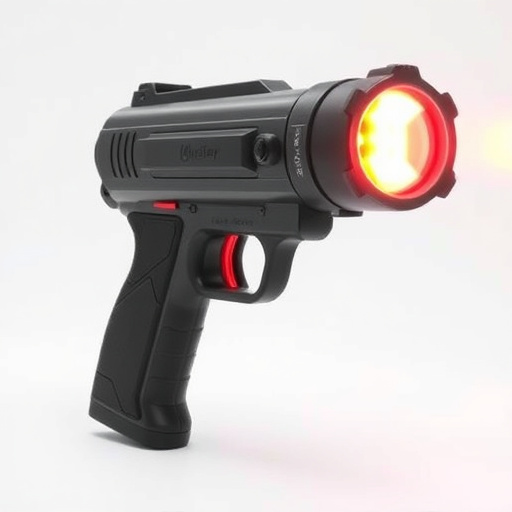
In the digital age, the hidden threat of Master Blaster stun guns has sparked a race to develop advanced detection methods. These non-metallic, compact devices evade traditional metal detectors, prompting the use of specialized equipment like RF and thermal imaging scanners. Stun gun manufacturers continually introduce new features, challenging law enforcement and security professionals to keep up with rapid technological advancements. To counter this, cutting-edge technologies such as enhanced metal detectors and AI are being employed, enhancing security in high-risk areas. The legal landscape for concealed weapon detection varies globally, emphasizing the need for advanced methods while balancing public safety and individual rights, with future innovations focusing on specialized sensors and AI-driven security systems.
In today’s world, ensuring public safety against concealed weapons is a paramount concern. With the rise in availability of master blaster stun guns, advanced yet subtle detection methods are becoming increasingly vital. This article delves into the intricate landscape of concealed stun gun detection, exploring current technologies and their limitations. We dissect the unique features of master blaster stun guns and their impact on detection, while also scrutinizing the challenges faced in identifying hidden devices. Advanced technologies for stun gun detection systems are also spotlighted, along with legal considerations and future prospects.
- Understanding Concealed Stun Gun Detection: The Current Landscape
- Master Blaster Stun Guns: Features and Their Impact on Detection
- Challenges in Detecting Hidden Stun Devices
- Advanced Technologies for Stun Gun Detection Systems
- Legal Considerations and Future Prospects of Stun Gun Detection
Understanding Concealed Stun Gun Detection: The Current Landscape
In today’s digital era, the concern over concealed weapons, specifically master blaster stun guns, has prompted a closer look at detection methods. The current landscape of concealed stun gun detection involves a mix of advanced technologies and traditional approaches. Metal detectors, while effective for standard firearms, often struggle to identify stun guns due to their non-metallic components. This gap in detection has led to the development of specialized equipment designed to pinpoint hidden stun guns, such as handheld scanners that use radio frequency (RF) or thermal imaging technology.
However, these advancements are not without challenges. Stun guns often have unique features that can evade current detection methods. For instance, some models may utilize non-metallic frames or employ advanced materials that interfere with standard scanning techniques. As a result, law enforcement and security professionals must stay updated with the latest technological developments to effectively navigate this dynamic landscape.
Master Blaster Stun Guns: Features and Their Impact on Detection
Master Blaster Stun Guns have gained significant attention for their powerful features, offering a high voltage shock designed to incapacitate an assailant quickly. These stun guns are often favored by individuals seeking personal protection due to their ability to provide a non-lethal but effective response in potentially dangerous situations. However, their popularity raises concerns about detection and the potential impact on security measures.
The advanced technology incorporated into Master Blaster Stun Guns makes them challenging to detect with traditional metal detectors or security scanners. While this stealthy design is appealing for discreet self-defense, it also poses a challenge for law enforcement and security personnel who rely on standard equipment. The compact size and non-metallic components contribute to their ability to bypass initial screening, leading to the need for more advanced detection methods.
Challenges in Detecting Hidden Stun Devices
Detecting hidden stun guns, like the Master Blaster stun gun, presents significant challenges for law enforcement and security personnel. These devices are often designed to be compact, easily concealable, and operate silently, making them nearly impossible to spot through visual inspection alone. Traditional metal detectors may not pick up on the subtle electromagnetic signals emitted by stun guns, especially when they’re integrated into everyday objects like keychains or wallets.
Furthermore, advancements in stun gun technology have led to the development of devices that use non-metallic components, further complicating detection efforts. These innovative but often untraceable designs can slip through security checks unnoticed, raising serious concerns about their proliferation and potential misuse. The ongoing arms race between stun gun manufacturers and those tasked with detecting them highlights the need for more advanced, versatile, and reliable scanning technologies to keep pace with these hidden dangers.
Advanced Technologies for Stun Gun Detection Systems
Advanced Technologies in Stun Gun Detection Systems are revolutionizing security measures, aiming to uncover concealed weapons like the Master Blaster stun gun. Researchers and developers are leveraging cutting-edge techniques to enhance detection accuracy. One prominent method involves using advanced metal detectors with improved sensitivity, capable of identifying even minimal traces of stun guns hidden on individuals. These detectors can employ various frequencies and pulse patterns to detect unusual metal objects, ensuring a more thorough scan.
Additionally, artificial intelligence (AI) is being integrated into security systems to analyze sensor data more efficiently. AI algorithms can learn and recognize specific signatures of stun guns, differentiating them from regular metal items. This technology enables real-time monitoring and early detection, making it particularly effective in high-risk environments. The integration of AI with other sensor types creates a robust defense mechanism against concealed weapons, including the Master Blaster stun gun.
Legal Considerations and Future Prospects of Stun Gun Detection
The legal landscape surrounding concealed weapon detection, including stun guns, is a complex web that varies significantly across jurisdictions. In many regions, the primary focus is on metal detectors and visual inspections at security checkpoints, with less emphasis on specific tools like the master blaster stun gun. However, as stun guns become more prevalent in personal defense, there’s a growing need for advanced detection methods to ensure public safety without infringing upon individual rights.
Looking ahead, future prospects of stun gun detection hinge on technological advancements and evolving legal frameworks. Innovative solutions could include specialized sensors that can detect the unique electrical signatures of stun guns, or even smart security systems integrating AI to analyze patterns and behavior for potential weapon concealment. Balancing these developments with privacy and civil liberties will be crucial, as societies strive to maintain a safe and secure environment while respecting personal freedom.
The detection of concealed stun guns presents a complex challenge, as demonstrated by the current landscape and evolving technologies. Master Blaster stun guns, with their advanced features, further complicate detection methods. While traditional security measures have their limits, advancements in technology offer promising solutions. As we move forward, legal considerations and continued innovation will shape the future of stun gun detection systems, ensuring safer public spaces.